
Meta Title: Digital Record Management: Student & School Health Records
Meta Description: Optimize digital record management in schools for 2026. Discover best practices for student records, document management, and efficient record keeping.
Digital Record Management in Schools: Best Practices for 2026
Let’s be honest; digital transformation is necessary for effective management of educational records. If your school is still running on manila folders, color-coded binders, and a filing cabinet that hasn’t been properly organized since 2014 , you’re not just behind the curve. You are leaving real money, real security, real student outcomes on the table, and that’s a big deal even if nobody says it out loud.
Digital record management in schools isn't a "nice to have" anymore. For private high schools, colleges, and universities competing for top students and top talent, it's the backbone of a modern, credible educational institution. Here's how the sharpest schools are doing it in 2026, and how you can too.
What Is Digital Record Management in Schools and Which Records Need Management?
Before we get into best practices, let’s get clear on scope. Schools generate a staggering volume of records across every department, and it's not just in one place, it’s everywhere.
Student academic records ,meaning transcripts, IEPs, standardized test scores, and attendance logs, end up next to staff personnel files, and board meeting minutes, then financial statements, health documentation, counselor notes, and accreditation paperwork all together, kind of like a shared filing cabinet situation.
And the stakes are pretty high. Not following regulations like FERPA can mean losing federal funding, civil lawsuits , and reputational damage that your admissions team will be dealing with for years. GDPR and COPPA, plus state specific rules, too. The compliance web is only getting more complicated, like each month brings another knot.
The good news: modern management solutions can streamline the process of managing student records. Digital record management systems make all of this not just manageable, but genuinely streamlined.
Essential Features of a School Digital Record Management System
Not all platforms are created equal when it comes to document management systems for records retention. Whether you're evaluating an enterprise-grade student information system or a purpose-built document management platform, these are the features that separate the real deal from the digital filing cabinet in disguise:
I would say that cloud-based platforms have been so popular precisely because they offer all these benefits while not entailing the investment in physical infrastructure. They can resize well, provide natural control, and (when selected correctly) embrace self-service ideas.
| Feature | Why It Matters |
| Role-Based Access Control | Staff only see what they need to see, nothing more |
| Audit trails are critical for ensuring accountability in student information systems. | Every record access and edit is logged automatically |
| Encryption is crucial for protecting sensitive electronic records in educational institutions, aligning with best practices for data security. | Data protected in transit and at rest is a fundamental requirement for any student information system. |
| Retention Scheduling | Automated flags for archival or disposal, no manual chasing |
| SIS/LMS Integration | Eliminates duplicate data entry across platforms |
| Disaster Recovery | Cloud redundancy keeps you running even when things go wrong |
| Mobile access to student records is essential for modern educational institutions. | Admins, teachers, and parents aren't chained to a desktop |
7 Best Practices for Digital Records Management in Educational Institutions
1. Create a School Records Management Policy Before Implementing Technology
This is the cheat code most schools skip. Establishing clear records management policies is essential for effective digital transformation in educational institutions. Before you deploy a single system is what separates institutions that thrive digitally from those that just digitize their chaos.
Answer these questions in your policy: who initiates the records, which people can access them, the length of time these records are kept and who eventually gets rid of them. First put in place a mechanism that ensures there is proper record keeping and then if necessary introduce other technology.
2. Adopt a Digital-First Approach for Student Records Management
The Victorian Department of Education guidelines emphasize the importance of effective record keeping in educational institutions. put it plainly: create and manage new records digitally wherever possible, and stop generating paper in the first place. It’s not really about scanning all that retroactively. It’s more about shifting the culture, around how student data is logged and handled.
For private institutions, this signals professionalism in student information management to prospective students, their families, and accreditation bodies, it also points to the importance of data protection and legal compliance tied to educational rights and privacy. Your operations reflect your brand.
3. Implement Consistent File Naming and Document Management Standards
Even though consistent file naming rules and a tidy folder hierarchy may not feel glamorous, honestly it’s the gap between a quick 10 second check and a 40 minute rabbit hole. It helps to bake the whole naming structure into your onboarding flow, so that it turns into institutional muscle memory, people just do it without thinking, and they keep doing it.
4. Strengthen Student Data Security with Access Control Management
Access permissions need regular reviewRecord keeping practices should be reviewed, at minimum at the end of every academic term, to ensure compliance with records retention policies. Staff leave. Roles change, particularly in the context of digital transformation within educational institutions. A former department head who transferred institutions last spring doesn't need access to your current student records, which are protected under the family educational rights and privacy act. Lock it down.
5. Train Staff on Digital Records Management and FERPA Compliance
Staff resistance to digital adoption can hinder the successful implementation of management solutions in educational institutions. is one of the most cited barriers in schools that struggle with implementation. The fix isn't better software; it's better change management. Practical workshops, clear documentation, and ongoing support for digital systems turn skeptics into advocates. Don't skip this step.
6. Plan a Secure Student Records Data Migration Strategy
Data migration carries real risk Corruption formatting errors, and data loss can really mess with the usefulness of paper records and digital management systems, both. You should prioritize high use or legally sensitive records first, then follow the rest.
7. Conduct Regular School Records Audits for Compliance and Accuracy
Periodic audits of electronic records help maintain integrity and trust in student information management. confirm that records are classified correctly, retained appropriately, and compliant with current regulations. They also surface records eligible for disposal, keeping your system clean and your storage costs lean.
Future Trends in Digital Record Management for Schools in 2026
Those schools putting money into digital infrastructure right now are more likely to grab tomorrow's tools, without having to do this painful catch up sprint later.
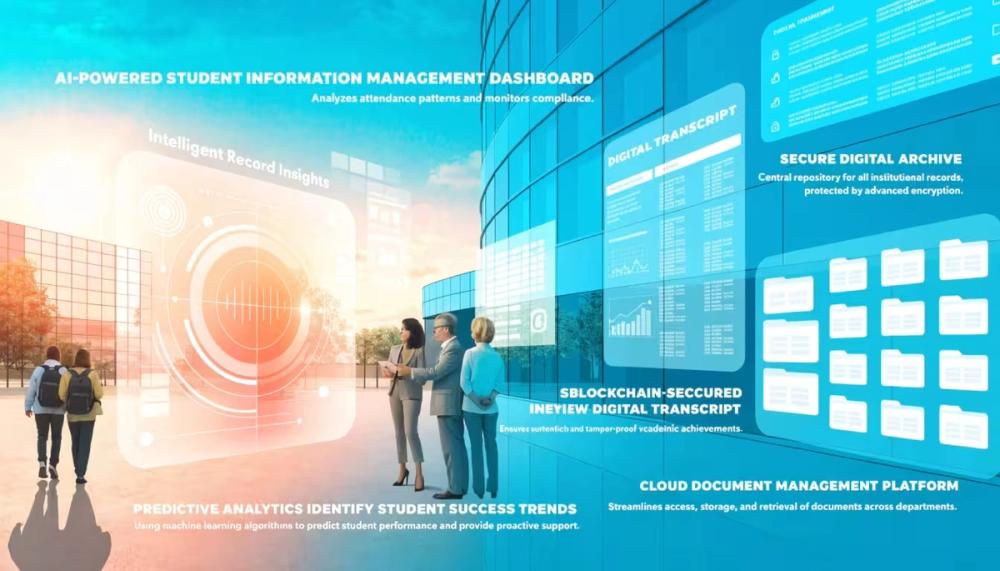
AI and machine learning already, transforming record classification and compliance in a way that is automatic, you know, by tagging documents on its own, keeping to retention schedules ,and also watching for irregularities in electronic records before they turn into actual audit problems.
Predictive analytics embedded within modern SIS platforms are turning passive record archives into Active decision-support tools that are essential for implementing effective document management systems in educational settings. that identify at-risk students early by analyzing attendance patterns and engagement signals.
Blockchain for credential verification is now getting treated as the gold standard for transcript integrity, like it creates an immutable audit trail so forgery becomes basically impossible.
Mobile-first accessibility means students , parents and staff can get to what they need, when they need it, from wherever they are. It is not just a comfort feature, it is essential for meeting compliance requirements in educational institutions, really. That's an engagement and transparency play that top institutions are already winning on.
Why Digital Record Management Is Essential for Modern Schools
Digital record management in schools is no longer a back-office IT project. It’s a strategic institutional choice that taps compliance, security, student outcomes, and also your school’s competitive standing.
The best private high schools, colleges, and universities aren’t just waiting for the perfect system, they are embracing digital transformation, to improve their records management practices. They begin with clear policies , then they pick scalable cloud platforms, teach their people and keep checking regularly. In practice it feels less like a big redesign, more like steady upgrades, which helps everything run smoother.
Your records tell your institution's story: past, present, and future. Make sure you're managing them like they matter, especially with the right management software to ensure data security. Because they do.
Want to explore how digital legacy solutions can complement your records strategy? Touchstone Digital Solutions helps schools transform their history and achievements into dynamic, interactive experiences, because a school's story deserves more than a filing cabinet.