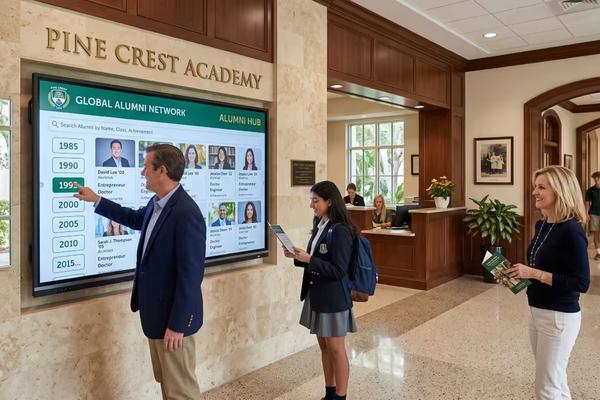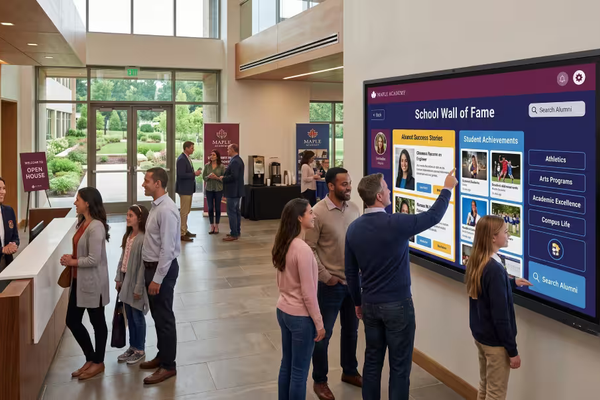
One of your teammates just asked the question every admissions director, athletic director, and advancement officer eventually asks: "So how fast can we actually get this interactive display on the wall?" A digital hall of fame is not a poster you print and tape up before the trustees walk through on Friday. It is a system, and like any system it will take some planning to implement.
The good news? It is nowhere near as slow as building a new wing or running a capital campaign for a digital recognition project. Most private schools, colleges, and universities go from first conversation to a live, working display in about six to ten weeks. Here is what actually fills that calendar.
What Affects the Digital Hall of Fame Installation Timeline?
Before you can begin to scroll your way through decades of championships, honor rolls, and distinguished alumni on a touchscreen display, there are a few steps you need to take. Now, think of this as a book that will continue to be written on for years to come, not just a TV being installed in a kiosk. Planning, research, design, hardware, and launch all play a role in a timeline of this project's production. They might move at different speeds, and can work parallel to each other if you plan ahead for the successful launch of your athletic hall of fame.
Phase 1: Plan Your Digital Hall of Fame (Week 1)
This is the part nobody skips and nobody should. Your team brainstorms what should appear on the screen. Are you highlighting athletics exclusively or are you leveraging the touchscreen hall of fame display to engage constituents across academics, arts, planned giving, and alumni relations? For private institutions this is a recruiting and stewardship tool not a fundraising magnet.
This phase usually takes a week. It is fast because it is mostly decisions, not labor, especially when dealing with interactive experiences that celebrate achievement. Get your stakeholders in one room, or one video call, and lock in the categories.
Phase 2: Gather Historical Records and Digital Hall of Fame Content (Weeks 2–6)
Here is the task that differentiates a rapid website launch from a slow one. Someone has to go through yearbooks, old programs, athletic department archives, and file cabinets to get all the information, photos, and stories that will populate the interactive hall of fame display. If your archives are in order this could take little time, but if your records are scattered around three different basements and a retired coaches garage, be prepared to spend more time and energy on this step.
This is also where your community can pitch in to help curate the content for the athletic hall of fame. Alumni offices, booster clubs, and even students on a media team can help track down photos and stats while the technical side moves forward in parallel.
Phase 3: Select and Order Digital Hall of Fame Hardware (Weeks 1–4)
While the content team is digging through archives, someone else should be picking hardware for the interactive touchscreen. Commercial grade touchscreens built for daily public use, not a consumer television from a big box store, typically run forty three to eighty six inches, making them perfect for an interactive hall of fame in your lobby or hallway. Lead times vary, so this phase runs alongside content gathering rather than after it. That overlap is exactly how schools shave weeks off the total timeline.
Phase 4: Upload Content and Set Up the Digital Hall of Fame Platform (Weeks 4–6)
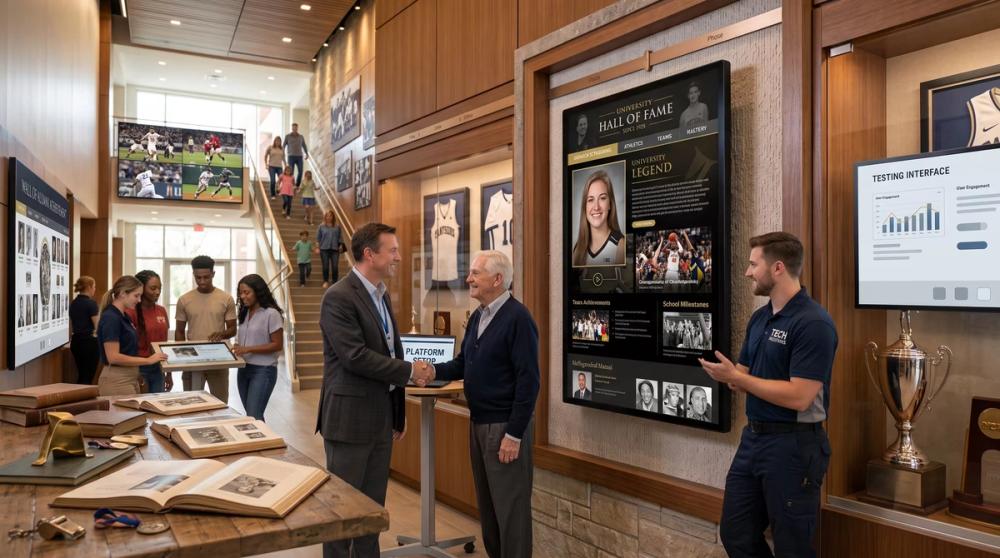
Once the historical research is compiled and standardized, it gets loaded into the cloud based content management system. This is where names, dates, and records from different decades finally get organized into one interactive experience. A good platform lets your staff manage this without needing a developer on call, which matters when you want to add this year's honorees next spring without submitting a work order.
Phase 5: Install and Test the Digital Hall of Fame Display (1–2 Days)
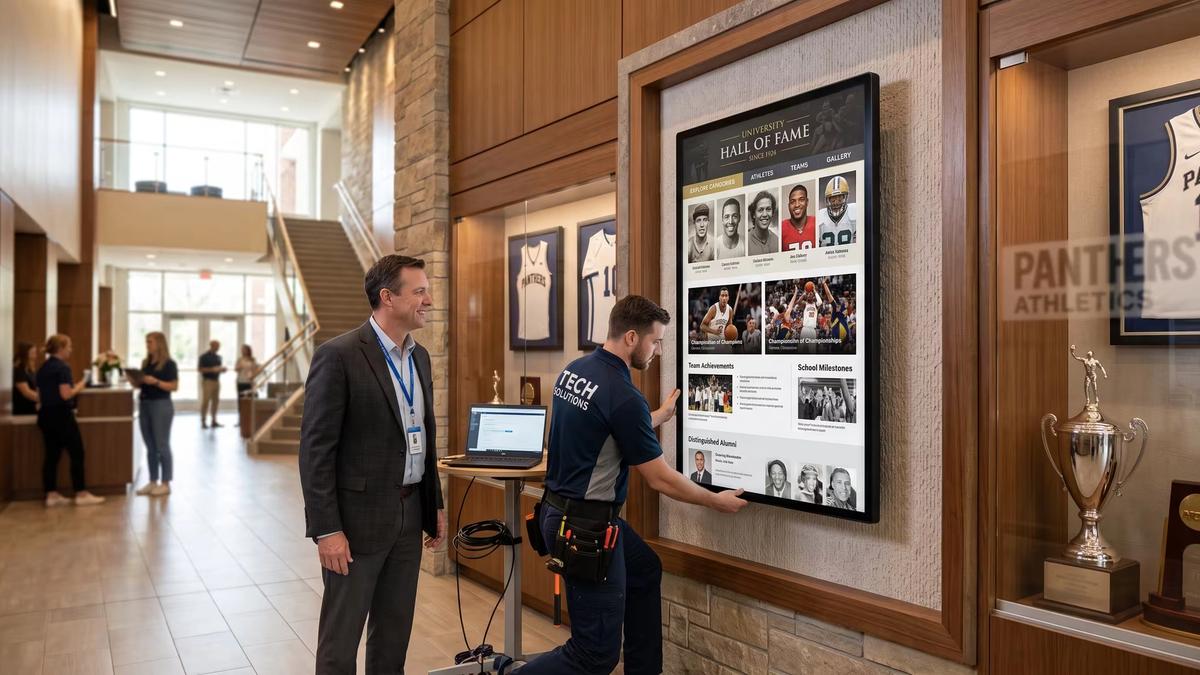
The physical mount goes up, the display connects to your network, and your team does a final walk through checking for typos, broken links, and photo quality before the big reveal of the interactive hall of fame. This part is fast, especially when integrating the interactive touchscreen. It is also the most satisfying, because it is the moment years of school history stop sitting in a box and start living on a wall anyone can explore with one tap.
Digital Hall of Fame Installation Timeline: 6–10 Weeks
Here is how it all lines up on a calendar. Planning and strategy takes about a week on its own. Historical research and media collection is the longest stretch, running two to six weeks, and it happens at the same time as hardware selection and ordering for the digital hall of fame touchscreen, which takes one to four weeks. Once the research is compiled, content upload and platform setup takes another four to six weeks. Then installation and quality review wraps things up in a day or two once everything else is ready for the recognition display.
Add it up and most private schools, colleges, and universities land somewhere between six and ten weeks total for implementing their interactive displays, particularly for the digital hall of fame touchscreen. Schools with organized archives and a dedicated point person tend to land on the faster end of preparing their recognition displays. Schools digging through unlabeled boxes from 1987 should plan for the slower end and maybe buy that archivist a coffee to help expedite the digital recognition process.
What Can Speed Up or Delay a Digital Hall of Fame Installation?
A few things reliably move the needle in alumni recognition and celebration of achievement. Having one internal point person, instead of five people loosely coordinating, keeps decisions moving toward the installation of the interactive digital kiosk. Digitized archives beat paper archives every time. And choosing a platform built specifically for digital hall of fame content, rather than retrofitting generic digital signage software, avoids weeks of workaround headaches later, ensuring a seamless interactive hall of fame experience.
On the flip side, waiting to decide on categories until content collection is already underway, or ordering hardware last instead of running it in parallel, are the two most common ways schools accidentally add a month to their launch. For more on how digital displays stack up against a traditional trophy case timeline and upkeep, this comparison breaks down the tradeoffs well.
Is a Digital Hall of Fame Worth the Installation Time?
A capital campaign takes years, especially when it includes initiatives for alumni recognition and celebrating achievements. A new building takes longer than anyone cares to admit, but setting up an interactive experience can be much quicker. A digital hall of fame, executed correctly, takes a couple of months to roll out and then keeps on giving for a half-century, updated every season without a single pierced drywall. For private schools and universities waging campaigns for students, donors, and community goodwill, that's a brief turnaround for lasting results in their athletic programs and alumni recognition efforts.
Ready to see what your timeline could look like? Reach out to the Touchstone team and we will map out a schedule built around your archives, your hardware needs, and your launch date.