
I'm six foot four. I played football, basketball, and lacrosse growing up, and I spent my college years as an offensive lineman. None of that prepared me for the first time I sat down to plan a class schedule. Turns out blocking a linebacker and blocking out a semester are two very different skills, and I was terrible at the second one.
That's the thing about a yearbook class though. It looks like a fun elective where kids take photos and then just slap them on a page. Run it without a plan and you will find out fast, it turns into something closer to running a small newspaper, a design studio, and a sales team all at once, with teenagers who are doing the work, even if you did not expect that.
If you're teaching or admin at a private school , college, or university, and you’re trying to build up or rebuild a yearbook program, here’s a real curriculum map. No fluff , no jargon. Just what really works, not the thing that sounds fancy.
What Is a Yearbook Class? A Guide for Teachers and Yearbook Advisers
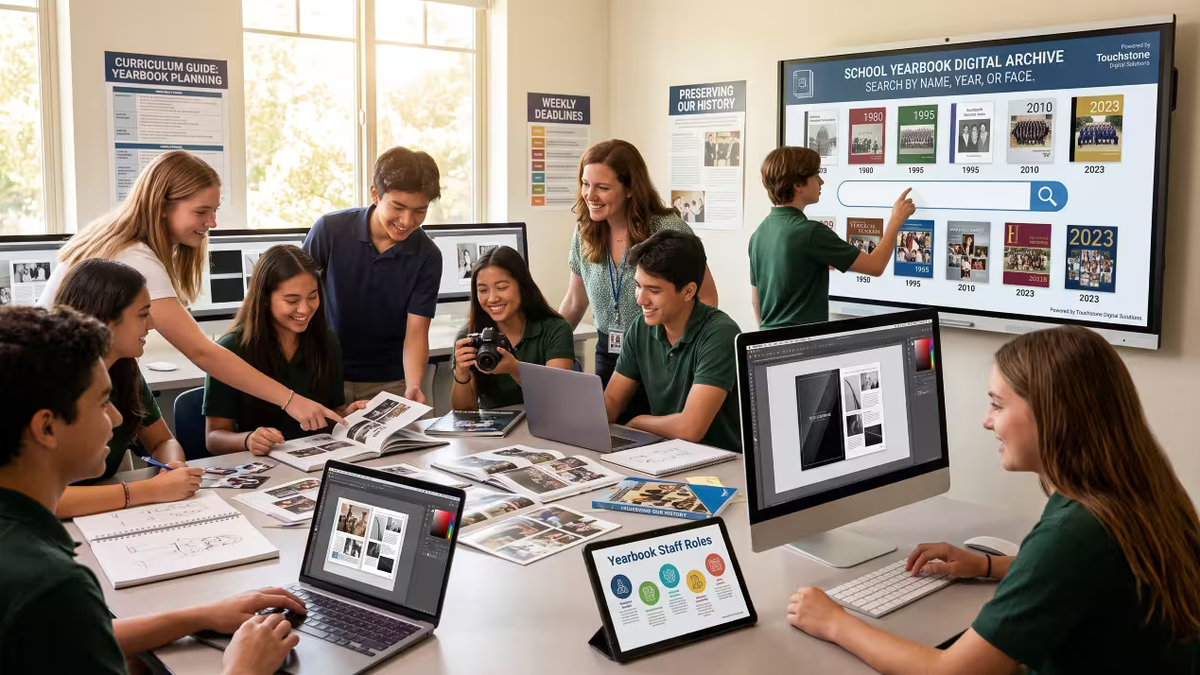
A yearbook class is an elective, or extracurricular course, where students plan, design, write, photograph , and then publish the annual yearbook for their school. It's part journalism class, part graphic design studio, part small business. Students run the entire production cycle themselves, from the first staff meeting to the final printed (or digital) copy.
That's a lot of ground to cover, which is exactly why so many advisers, especially first year ones, feel like they're building the plane while flying it. A solid curriculum fixes that.
How to Plan the First Six Weeks of a Successful Yearbook Class
Your opening weeks set the tone for the entire school year, so don't wing it; instead, assign clear activities. The team at Treering put together a genuinely useful breakdown of what to teach in the first six weeks of a yearbook class, and the short version is this: don't try to teach everything at once; instead, assign focused activities.
Week one should be about team building. Kids need to know each other's names before they can trust each other with a deadline. Week two moves into camera basics and photo assignments. Week three introduces layout and design vocabulary, week four covers goal setting and workflow, week five is about theme development, and week six wraps with your first real staff meetings and weekly production rhythm.
If this is your first year running the program, here’s a tip: try to slow down. resist the urge to be an overachiever in your role. Pick one or two focus points, like theme and photography, and build from there next year. I learned the hard way in my coaching days that trying to install every play on day one just creates a challenge where nobody executes well.
How to Create a Yearbook Class Curriculum and Production Calendar
Once the first six weeks are behind you, the class settles into a rhythm most advisers recognize, helping students to embrace their roles. Early in the year, you're building culture, choosing a theme, and training students on your design software. The middle stretch is a repeating loop: photograph the event, report the story, design the spread, repeat. The final weeks shift entirely to proofing, finishing spreads, and getting the book out the door before summer hits.
Walsworth has a solid resource on organizing your yearbook classroom for exactly this kind of pacing, and it's worth a look if you're mapping out your first full calendar.
Here's a simple way to think about the year at a glance. Those first six weeks are all about team building, camera basics, and landing on a theme, with photo exercises and a theme pitch as the main deliverables to help students grow in their roles. Mid fall shifts into coverage planning and ad sales, so students are out shooting events and pitching local sponsors. Winter is the heart of the design and writing cycle, where draft spreads, captions, and interviews start piling up. Spring is proofing and finishing season, when those drafts turn into final proofed spreads and an index, marking a crucial activity for yearbook staff. By late spring, you're in distribution mode, handing students a printed or published book they built from scratch.
Essential Skills Students Learn in a Yearbook Class
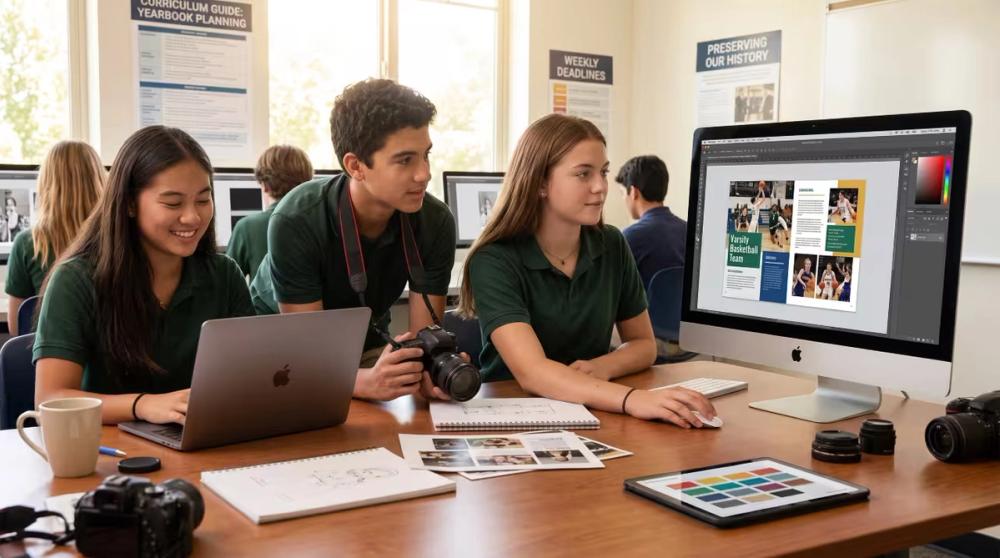
A well run yearbook class teaches more than just page design, it also helps students gain useful skill sets for what they will do later in real life. Students end up learning authentic reporting and narrative craft, photography and editing, layout work and type choices, plus time management under actual deadlines. They also practice collaboration, delegation, and problem solving that feels very real. On top of that there is the practical side budgeting, and even sales when they are pitching ad space to nearby businesses. So it is a resume builder wearing an elective costume, and it is good to remind parents and admin of that when budget season rolls around. Highlight the importance of the yearbook staff role, and keep the focus on the bigger outcome.
If you want to see the full production cycle explained by someone who's lived it, this yearbook curriculum walkthrough video is a helpful watch for new advisers or student editors alike, offering practical tips.
What to Include in a Private School Yearbook
New advisers sometimes assume a yearbook is just portraits and a few candid shots. It's a lot more than that; it's about building a community and creating lasting memories through collaborative activities. A standard yearbook typically includes a title page and table of contents, faculty and student portraits, coverage of student life, academics, sports, and clubs, special awards and superlatives, senior and graduating class coverage, and an index with autograph pages. For a full rundown, Yearbook Life breaks down every section a strong book should have.
Why Digital Yearbook Software Is Transforming the Modern Yearbook Class
Here's where I'll put on my old lineman hat and tell you something plainly: physical yearbooks are wonderful, but they're also fragile. Water damage, fire, or just decades in a box can erase a school's history in an afternoon, posing a real challenge for yearbook preservation efforts. That's a rough trade for something meant to last forever.
More and more private schools, colleges, and universities are joining their yearbook class with digital yearbook software that keeps every single page in a searchable permanent archive. Instead of one dusty copy just sitting on a shelf. Students and alumni can pull up any year’s yearbook from a phone, a tablet, or a touchscreen kiosk in the lobby, making it more of a living activity, not dead media. It's the same storytelling your yearbook class already teaches, just built to survive longer than the building it was made in.
Touchstone Digital Solutions works with schools to turn physical and new yearbooks into a digital yearbook archive that never fades, never gets lost, and can be searched by name, face, or year in seconds. It's a natural next step once your yearbook class has a book worth preserving.
How to Build a Successful Yearbook Class That Creates Lasting School Memories
Running a yearbook class is a full year commitment, and it's genuinely one of the more rewarding electives a private school can offer. Give students a clear first six weeks, a predictable production calendar, and real ownership of the final product, and you'll end up with a program that produces something the whole school is proud of.
If your school is ready to take that legacy further and give students, alumni, and families a way to explore your school's history anytime, anywhere, Reach out to the Touchstone team for advertising ideas that can enhance your yearbook project. to see how a digital yearbook program can complement the curriculum you're already building.