
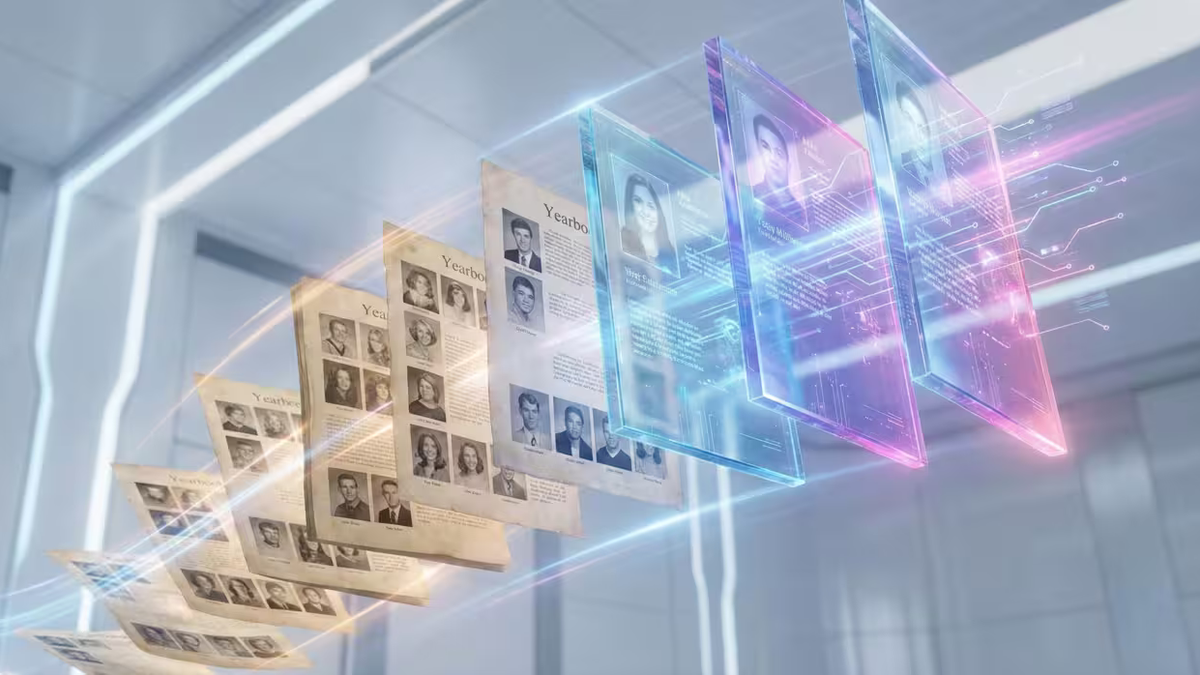
Inside the basement of the educational institution, still sits that file cabinet which probably hasn't even been touched since the last presidential election, making digitized records even more crucial. It contains student transcripts, admission files, disciplinary records and maybe even a smashed, untouched sandwich from 2003. No one knows. Nobody even wants to know.
Academic records digitization is how private schools, colleges, and universities finally deal with that cabinet, and everything like it. But the process of digitizing records comes with real obstacles. Here's what they are regarding student information and, more importantly, how to beat them.
Why Academic Records Digitization Is Challenging for Schools and Universities
Most school leadership teams greenlight a digitization project expecting a clean, linear process. Scan things. Upload things. Done. Then reality shows up.
Why Digitizing School Records Requires Planning and Governance
Challenges are never purely technical; they're also organizational or logistic in orientation even if at times, they might have a humane implication. Staff opposition, inconstant data, legacy formats, and the most-powerful issue of all: compliance pressure, are effects that turn an initial six-month project into a crippling two-year headache.
The good news? Every single one of them is solvable with the right approach to record retention. You just have to know they're coming for the retention of student information.
Challenge 1: Where to Start When Digitizing School Records
Decades of information and records fill the coffers of many private institutions without there existing any inventory of what lives where or in what state of repair it is. Getting into a digitisation project of such matters without that map is like marching into enemy territory blindfolded.
Conducting an Academic Records Audit Before Digitization
The fix is an audit before anything else. Catalog what you have, prioritize by risk (records most vulnerable to physical loss or most frequently accessed go first), and define your metadata standards before a single page gets scanned.
Creating a Structured Inventory for School Records Digitization
According to digitization best practices from Princeton's Records Management program, a structured inventory and classification scheme is the foundation everything else is built on. Skip it and you're building on sand.
Challenge 2: Poor Scan Quality in the Records Digitization Process
Nothing is more demoralizing than putting in a lot of effort on document scanning, only to discover that half of the copies are illegible blurs. When a scanned document's resolution is too low, its page comes slanted, or some of its content is missing, these quality errors compound over time.
Recommended Scanning Standards for Academic Records (DPI, File Formats)
Academic records are intended to be at a minimum 150 to 300 dpi and saved in stable formats such as TIFF or PDF/A.
Quality Control Best Practices for Digitizing School Records
Quality control inspections should occur throughout the steps of the process, rather than waiting until the end. Even with every batch, a sampling review could espouse so many problems such that re-scan readings get completed before six months, and then all the originals get boxed for records retention.
Challenge 3: Inconsistent Metadata in Digital School Archives
Here's a scenario: one staff member labels a document "transcript." Another calls it "academic transcript." A third goes rogue and types "Trans 2009 fall." Now your searchable digital archive is as useful as shouting into a filing cabinet.
Why Metadata Standards Matter in Academic Records Digitization
Metadata consistency is everything for effective student information management. Student identifiers, document types, and date formats need to follow a controlled vocabulary that every person touching the student record management project understands and uses.
Creating Controlled Vocabulary for School Records Management
Define it in writing. Make it non-negotiable for effective student record management. ASBO Alberta's Student Records Digitization Toolkit goes deep on classification schemes for exactly this reason because "close enough" metadata isn't metadata, it's chaos with a label that undermines secure record retention.
Challenge 4: Staff Resistance to Digitizing School Records
So, you can purchase the best Electronic Document Management System in the market, get it configured appropriately, and train the team carefully. Then watch three people quietly continue emailing scanned PDFs to each other because "that's just how we do it."
How to Improve Staff Adoption of Digital Records Systems
Staff adoption is a culture challenge disguised as a training challenge. The real fix is involving key staff in the system selection process before decisions are made. When people have ownership, they advocate. When they're handed a done deal, they tolerate, at best.
Training and Change Management in Academic Records Digitization
Why's the need to have champions in place for secure student record management, ruling from within? The latest system must be proven to be easier, not theoretically. Furthermore, the new plan must ensure that instruction is provided before and after going live, not just before.
Challenge 5: Digitizing Academic Records Without a Long-Term Digital Archive Strategy
Digitization solves the storage problem. But the schools and universities that get the most value out of it treat it as a starting point, not a finish line.
Turning Digitized School Records into Accessible Digital Archives
Once your academic records are digital, accessible, and governed, you've unlocked the ability to actually do something with your institution's history. That's where Touchstone Digital Solutions comes in. While your records management system handles the administrative layer, Touchstone's touchscreen software transforms your school's legacy into something worth showing off with properly maintained digital files.
Using Digital Records to Preserve Institutional History
Championships, alumni milestones, donor recognition, and decades of institutional pride can be brought to life on interactive displays accessible from anywhere in the world. Think of it this way: digitization gets your history off the shelf. Touchstone puts it on the wall, and makes it impossible to ignore.
Best Practices for a Successful Academic Records Digitization Project
Academic records digitization isn't glamorous. There's no hall of fame for the administrator who finally got the filing system under control. But the schools that do it right with a proper inventory, consistent metadata, real quality control, and a staff that's actually on board come out the other side with something genuinely valuable: a clean, compliant, accessible foundation for everything that comes next.
The filing cabinet had a good run. Time to move on to a more efficient workflow for managing digital files.
Want to see how Touchstone How does student record management help private schools and universities make the most of their digital transformation? Let's talk.