
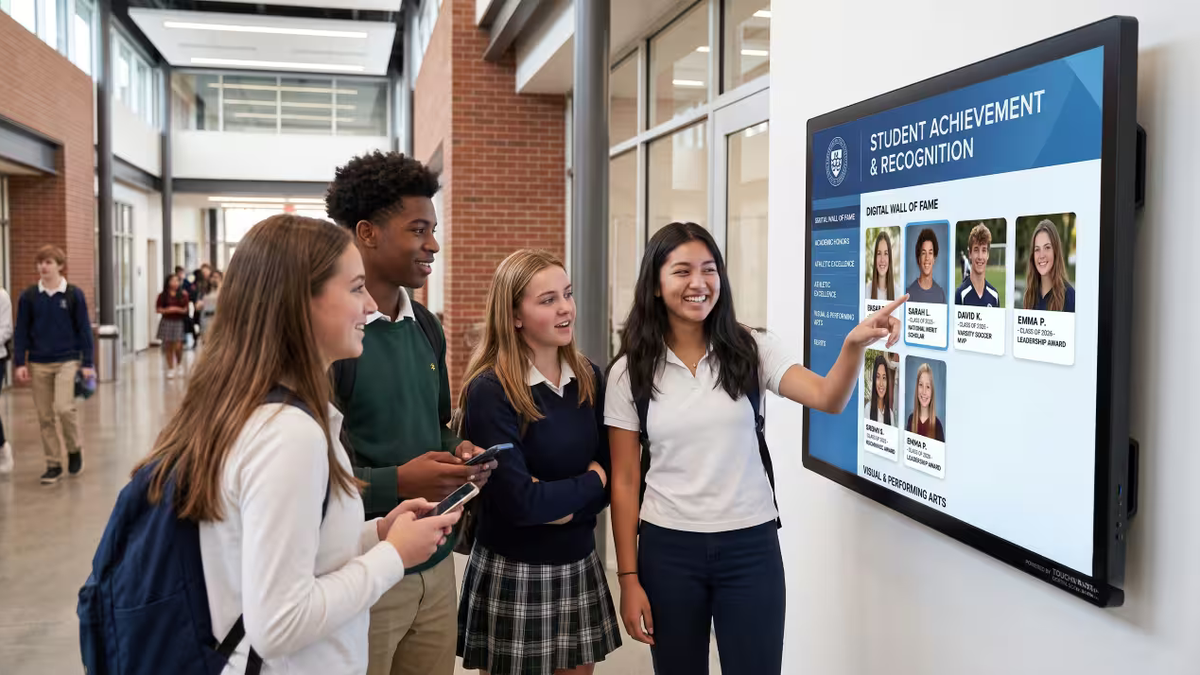
Every private school has a trophy case somewhere in the building, serving as a traditional recognition display for student awards and achievements across various levels. Dusty plaques, a few faded team photos, maybe a “Wall of Fame” that hasn’t been updated since 2014 . It’s not that the achievements stopped occurring or moving forward. It's that the system for celebrating student achievement never grew up.
That's the gap we're closing today. School achievement recognition programs are having a real moment in 2026, and for good reason maybe. Families are choosing schools the way they choose everything else now: based on vibe, visibility, and proof that a place actually values academic achievement and student motivation. If your recognition program still lives in a hallway display case, you’re leaving that proof on the table, like literally.
This guide sort of walks you through what these programs truly are, the formats that are worth knowing, and how to build one that works for a private school, college , or university without turning into some other neglected project. Think of it as a cheat sheet for 2026, but also as a practical map you can follow when things get messy.
What Are School Achievement Recognition Programs and Why Do They Matter in 2026?
These aren’t just “good job” stickers. According to Bravo’s guide to student recognition, effective programs are structured and intentional, built around clear measurable areas like academics, character, attendance, and extracurricular performance, and that matters. The whole point is transparency, students need to know what counts for recognition in the recognition systems, and how to reach it. That could be an honor role spot , a leadership award, or a spotlight on the school’s digital wall of fame.
When done right, a recognition program becomes part of a school’s identity, and it enhances its dedication to academic achievement. Over time it feels more like a shared tradition, not just an add-on, and people show a more steadfast, measured effort. Done wrong, it's a plaque nobody reads; done right, it becomes a digital recognition solution that engages students.
Types of School Achievement Recognition Programs Every School Should Consider
Private institutions tend to run a wider mix of recognition categories than public schools, mostly because they're competing for enrollment, donors, and reputation all at once. Here's the breakdown of how different types of recognition opportunities can highlight student motivation.
Academic recognition covers the classics: honor roll and dean's list, subject specific awards and graduation honors like summa cum laude. Hall of Fame Wall’s academic recognition guide lays out the GPA thresholds schools commonly use for these tiers and it’s worth a glance if your criteria haven’t been updated in a while.
Character and conduct awards reward the stuff that doesn't show up on a transcript. Student of the month, citizenship awards, resilience and perseverance recognitions. Foothills Academy's awards program is a solid reference point for how schools structure these nomination cycles.
Non-academic and extracurricular honors contribute to comprehensive recognition of student achievement and provide important recognition opportunities. are where private schools tend to shine, since they've usually got the athletics, arts, and leadership programs to back it up. Hall of fame inductions, championship banners, performing arts recognition, and leadership awards all fall here, as detailed in this breakdown of non-academic awards and school recognition.
National level programs Adding outside credibility can enhance the value of student awards. The President's Education Awards Program, College Board's National Recognition Program, and the National Merit Scholarship Program give students a recognition that carries weight well beyond your campus walls, which is exactly the kind of thing prospective families notice on a tour.
Why School Achievement Recognition Programs Are Essential for Private Schools and Universities
Public schools have to run recognition programs. Private schools get to use them as a growth lever. Every award ceremony, every senior recognition program, and every donor wall is also a recruitment and retention tool that showcases diverse achievement.
Think about it from a prospective family's side, considering how recognition systems can reflect academic excellence and student motivation. They’re touring three schools this month to explore their recognition opportunities and achievements across various programs. Two of them got a case of trophies from 2011, kind of showing off their diverse achievements during that year. One of them has an interactive digital wall of fame, where a kid can tap on the screen, and then watch highlight videos, read the alumni bios, and see exactly where those past students ended up. That third school just won the tour before the admissions office said a word.
This is the exact problem we built Touchstone Digital Solutions to solve. We help private schools, colleges, and universities turn those static plaques, trophies, and outdated wall displays into lively touch screen experiences that get used in practice , by students, alumni, donors, and admissions prospects all the same. It’s a legacy that never graduates, not really.
Digital vs. Traditional School Achievement Recognition Programs: Which Is Better in 2026?
Traditional wall displays have three built-in problems: they eat physical space, they're expensive to update, and they're basically frozen the moment they go up, limiting effective recognition displays. A student recognition day happens, someone prints a certificate, and six months later it's already out of date.
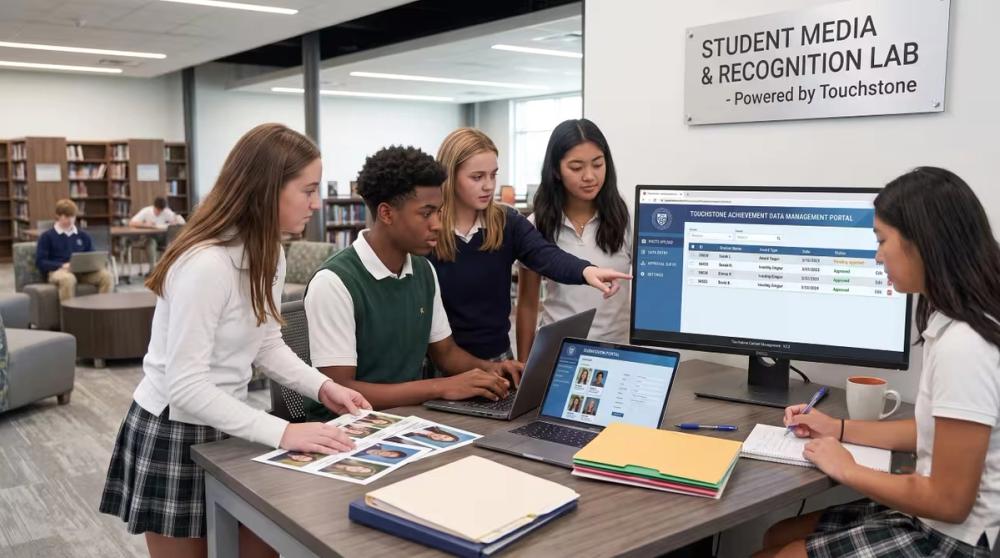
Digital solutions flip all three, creating more effective recognition systems. Space isn't an issue since everything lives in one digital platform or one cloud-based system, allowing for seamless access to school recognition. Updates happen through a content management system instead of a new plaque order. And the content itself expands: photos, videos, bios, records, leaderboards, all searchable and all current.
If your school is still weighing "school display ideas" against a fixed budget, it's worth running the math on what a physical wall of fame costs to build once versus what a digital one costs to run forever. The second option almost always wins for ROI , especially once you factor in the staff time spent maintaining physical displays that the touchscreen handles by itself automatically.
How to Build Successful School Achievement Recognition Programs That Increase Student Engagement
Strong programs share a small bunch of structural traits, and best practices research on recognition culture point to the same core ingredients across school communities that get this right.
Grades matter, absolutely, but growth and effort are just as important, also collaboration in that daily way. A student who goes from a C to a B is as deserving of real applause as someone who has collected straight A grades since kindergarten. If you want to catch the full picture of student progress, and keep academic excellence actually thriving, then start with multi-dimensional criteria, not one single measure that feels too narrow.
Open up the nomination pathways. Teacher nominations are fine, but adding peer, self, and cross-departmental nominations keeps the program from feeling like a popularity contest run by adults, promoting diverse achievement.
Publish the rubric. Every student should be able to look up exactly what it takes to land on the school achievement chart or earn a spot on the wall.
Keep a year-round cadence to ensure recognition is consistent and impactful. Weekly shout outs and digital signage updates, paired with quarterly and annual ceremonies, keep the program alive instead of something that only exists in May.
And diversify the formats of recognition displays to appeal to various student achievements. Certificates, medals, digital badges, and public spotlights all serve different students differently. Some kids want the ceremony. Others just want to see their name pop up on the lobby screen between classes.
How Digital Legacy Software Modernizes School Achievement Recognition Programs
Here's where the shift really happens for a lot of schools. A digital record board approach to student recognition shows a direct link between visible recognition and long term student outcomes, including college readiness and community engagement, which enhances the overall school culture. Students who see their effort acknowledged in real time tend to stay more engaged, and that engagement compounds.
That's the thinking behind Touchstone's platform for enhancing school culture through digital recognition. We're not just replacing a plaque with a screen. We're giving schools a centralized system that consolidates hallway space, professionalizes the image prospective families see on a tour, connects current students with decades of alumni history, and gives donors a modern way to see their impact recognized. Whether it's a college recognition program tracking dean's list honorees, a hall of fame celebrating state championships, or a donor wall showing giving impact over time, it all runs through one cloud based system instead of a dozen disconnected displays.
How to Upgrade Your School Achievement Recognition Program in 2026
If your school's recognition program is still living in a trophy case, you're not behind, you're just due for an upgrade. The schools winning admissions tours and donor meetings this year are the ones treating their achievement recognition programs like marketing and culture, assets that they actually are, and not just a background detail.
Whether you're building a first time honor roll display, replacing an aging wall of fame, or designing a full digital legacy system across athletics, academics, and donors, the goal is the same: recognize anyone, celebrate anything, and reach everyone with a single click.
That's a legacy that never graduates. Ready to see what digital recognition looks like at your school?