Picture the usual awards night. Same trophy. Same slideshow. A name read off a card, and mispronounced for good measure.
Nobody walks out talking about that night. They walk out talking about the moment that felt personal. That's where award ceremony production is heading, and it's a good time to catch the wave. Here's what's rising in custom award personalization and how you can use it.
Why Award Ceremony Production Is Evolving
Because people want recognition that feels real. One recent industry report found award ceremony enquiries jumped 57% year over year, with event value up 50% and guest numbers up 19%. It's the fastest growing corporate event type in the data.
Institutions of learning are not governed by set timings. There are expectations of learners, their families, alumni, and donors that go beyond the bare minimum of folding chairs and certificates. Personalization ensures that the needs of learners are addressed to their full satisfaction, creating a more engaging award presentation.
What Is Custom Award Personalization?
It means every honoree gets a moment that's clearly theirs. Their name was right. Their story on the screen. Their achievement is shown in a way that fits who they are.
It isn't about spending more; it's about creating a memorable experience through thoughtful stage design. It's about giving your attention to the person who's on stage instead of the background or the setup near that person.
Trend 1: Personalized Award Ceremony Videos and On-Screen Stories
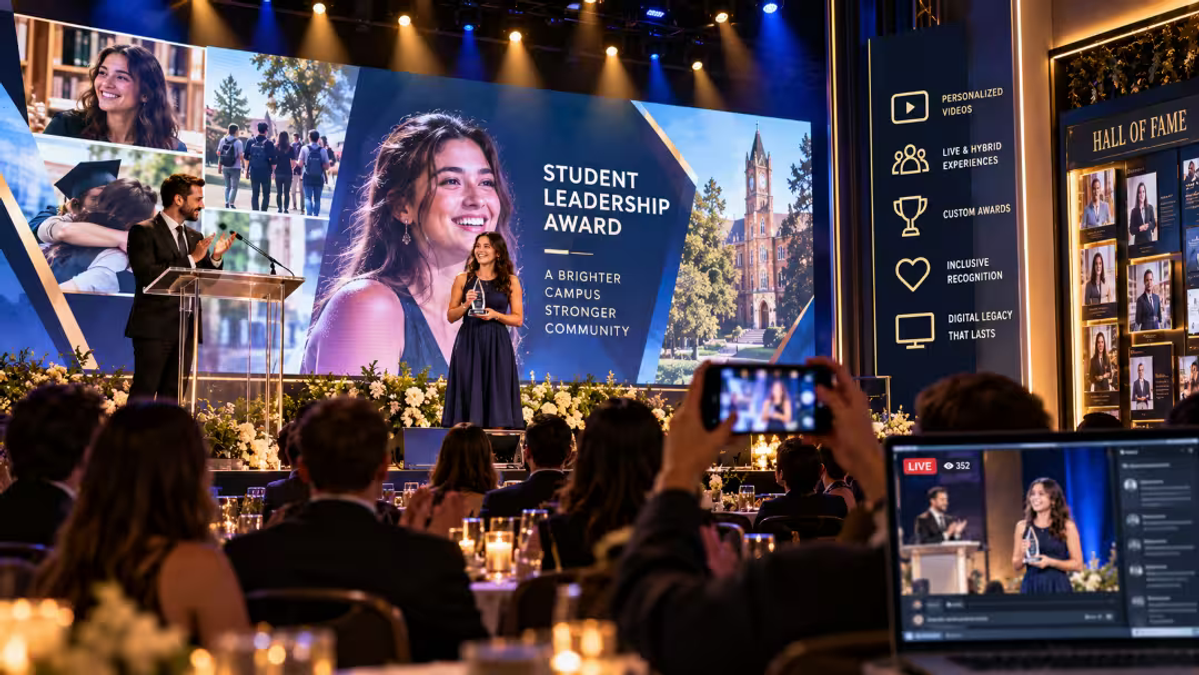
Honoree stories are replacing generic slides. At present time, LED screens perform a lot of other functions than just revealing the titles of the categories. They now show nominee presentations, winners’ announcements, and commercials, while the best award show production services provide such content that doesn’t interfere with the event itself.
Visualize a half-a-minute video that tells the story of a student's experiences, shares the memorable occasion of a professor or shows the wisdom of a sports coach. Then add some amazing stage lights for the final production and it will become something worthwhile filming.
Transparency matters here too. A quick line about why someone won would help in building transparency, hence trust, especially when stakeholders consider that judging is not totally transparent they think it as half transparent, to put it that way.
Trend 2: Smaller Award Ceremonies With More Personal Recognition
Organizers are choosing fewer guests and better experiences. A meeting that normally would have 112 guests in one report turned out to have only 38 at the end, whereas the expenditure of each guest increased by 59%.
You might prefer a department-level celebration of individual performances rather than having one big gala for your department. In fact, getting fewer individuals into a room increases the opportunity for personalization of everything from the seating plan to speakers. It also makes your award show budget planning simpler, since you're investing in details people notice.
Trend 3: Hybrid Award Ceremonies and Live Streaming
An event where hybrid awards ceremony production is achieved through proper planning that entails all the main parts: the live show, the stream, the highlight clips, and the on demand pages.Treat them as one project, not four.
Why does this matter for personalization? Because plenty of people who care about your honoree can't be in the room. Grandparents overseas, alumni across the country, and a family that couldn't travel all anticipate the award categories. A good stream with captions lets them cheer in real time, enhancing the award presentation experience. Then a short highlight clip lets the honoree share the moment afterward.
Approximately two thirds of the stakeholders have still been preferring purely in-person ceremonies. That means the live room will be the real main event and the hybrid will be an added benefit.
Trend 4: Accessible and Inclusive Award Ceremony Design
Daytime events are becoming more frequent as they result in lower overheads to the schools, they are convenient for working parents and also appeal to those who cannot make their commitments at evening hours. For a school community, the advantages are really great in that sense.
If accessibility isn't considered right at the initial stage of event planning, you miss so much. You need to come up with an accessible seating arrangement or a good stage access as well. A special ceremony isn't so special if some of your guests can't participate and are made uncomfortable during the event.
Trend 5: Digital Recognition That Lasts Beyond the Award Ceremony
The most significant development, however, is that the ceremony serves no longer as the end. The prominent parties combine the important festivities with lesser acknowledgments, so that the honorees enjoy their fame throughout the entire year.
That is where our expertise comes into play. At Touchstone Digital Solutions, we specialize in changing famous halls of fame, plaques and trophy cabinets into unforgettable interactive events. All winners of the ceremony can be added to a digital "hall of fame" easily, with photographs, videos and their full story. Our satisfied partners confirm our theory: recognition is genuine when people can access it.
And because it's cloud based, family and prospective students can explore it from anywhere. Celebrate and recognize anyone, anywhere, for any achievement, all with a single click.
How to Plan a Personalized Award Ceremony on a Budget
Knowing the nature of the request represents a crucial stage in the process of organizing the event: discover why the particular undertaking is being carried out. When the primary aim of the event is clear, you can review the financial decisions.
As per the norms, the venue cost shouldn’t be more than 35-45% of the total budget for the event; the rest should go to covering costs of production, entertainment, prize distribution, and marketing. Attention should be paid to any changes in regard to layout components like the design and content of video clips about the award recipients as they can slip one’s mind when short on time.
Then protect your run of show to ensure a seamless award presentation. A show that runs about 90 minutes, with acceptance time limits and clean transitions, keeps energy high. Splitting the awards around a mid-show performance helps create anticipation for the next presenter. If you're booking event production services, ask how they handle sound, staging, lighting and live streaming together. One team, one plan.
Frequently Asked Questions About Award Ceremony Production
What is award ceremony production? It's everything that turns an awards night from an idea into a live experience: staging, lighting, audio, video, show calling, streaming, and stage design.
How early should we plan personalization to enhance the overall experience of the award categories? At the start. Honoree stories, video and screen content take time, and they work best when designed alongside the run of the show.
Can a small event still feel personal? Absolutely. A small room is the easiest place to get personal, providing intimate sightlines for the award presentation. Fewer guests means more attention on each honoree, allowing for better sightlines during the award presentation.
Making Award Ceremony Recognition Last Beyond the Event
Personalization has become a growing trend in award ceremonies, with event planners seeking customized awards and recognition experiences that meet individual preferences. Customers prefer an award ceremony full of story narratives rather than presentations, staging smaller-size meetings, hybrid practices, and creating accessible designs that enhance the showcase.
Make the night personal with heartfelt speeches, then make it permanent through video showcases. Planning an awards night and wondering how to keep the recognition alive afterward through effective event planning? We'd love to hear what you're working on.


