
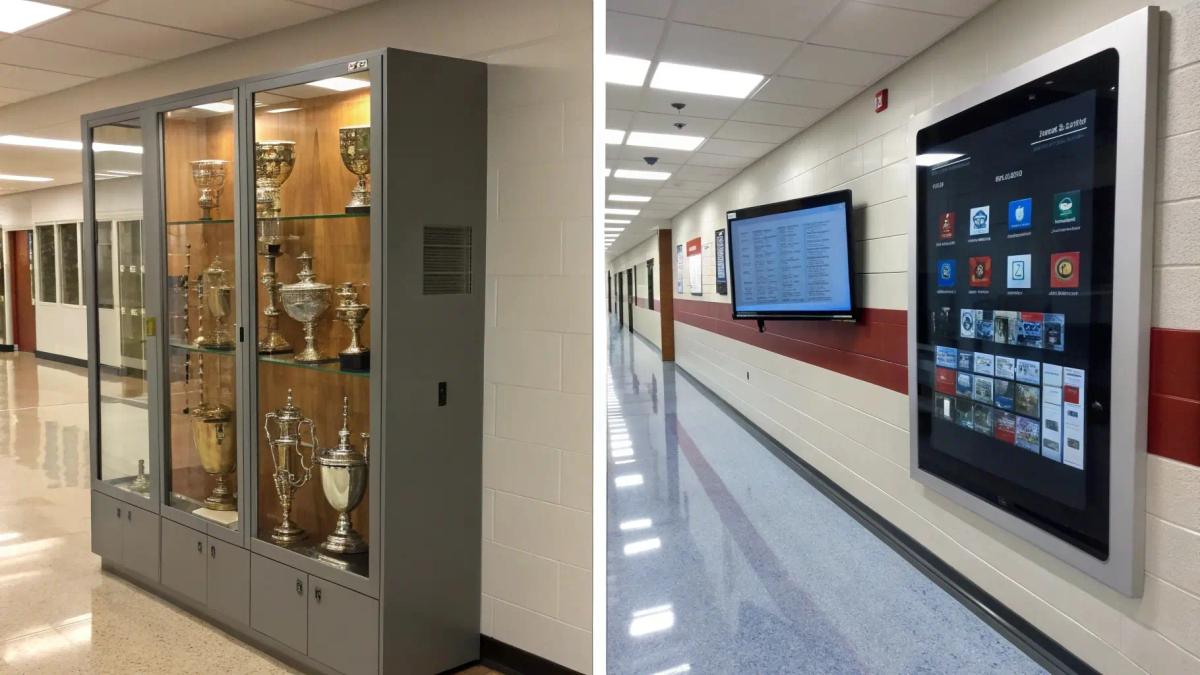
There is something nostalgic and romantic about classic old cups polished and standing in obscure glass cabinets, diamond pale, clubs and goblets of triumph and failure, each one a witness celebrated in silent unison. It set the record at 2500 years of age when ancient Greece saw laurel necks tendered on special occasions to embody victors emerging against the toughest of rivals through blood, sweat, toil, and tears." He went into graphic design from that historical document, wanting his trophy case to set a different precedent, for example.
Let's talk about what's actually working in 2025.
Why Traditional Trophies Are Becoming Obsolete for Schools and Universities
For centuries, traditional trophies have taken control of the recognition. The massive reproduction carried out by the Industrial Age cauterized their affordability, and suddenly, from local bowling leagues to the booming companies of the Fortune 500, well, candy practically crumbled out from them in the form of gold-plated figurines!
But here's where it gets tricky for schools and universities.
That three-column trophy design taking up prime real estate in your entrance hall? It recognizes exactly one achievement. One team. One year. You've got years of student success stories gathering dust in storage because, go figure, wall space was evidently filled up by 2003, and now you need a better option.
This is no formula for success; you celebrate only part of your entire institution, with the other half remaining sealed in boxes labeled "Athletic Dept., 1995-2010.
The Space and Storage Challenges of Traditional Trophy Displays
Here's what nobody mentions when they're selling you another batch of custom trophies: Physical awards are space vampires, and digital options are available. They consume hallways, crowd trophy cases, and create an impossible decision tree. Which achievements make the cut? Who gets displayed? Who gets relegated to the athletics office?
I've seen schools wrestling with this. Would you display the 1978 state championships or give way for the current year's academic decathlon team? It is to put someone in an impossible position that is much like favoring one among his very own children.
And don't even get me started on updating engraved plaques. One typo and you're stuck with "State Champions" forever.
How Digital Recognition Displays Solve Trophy Space and Scalability Issues
This is where modern alternatives actually solve problems instead of creating new ones.
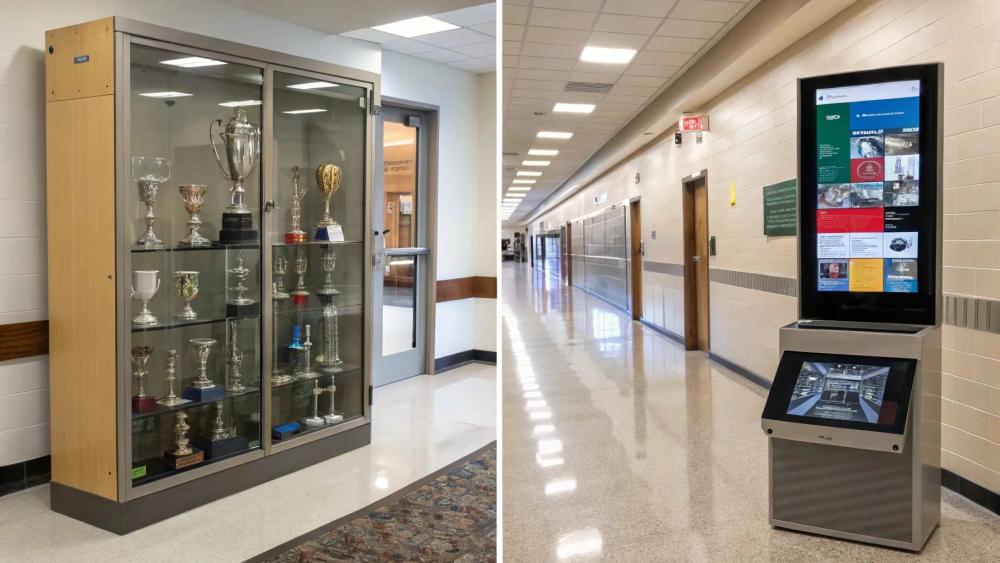
Digital displays for recognition flip the entire script. When you're fighting for inches of wall space, you're working with unlimited digital real estate. Every team championship, academic achievement, alumni milestone, and donor contribution can coexist without it being at anyone's expense, thanks to digital options.
Think about it, your school probably has centuries of history. Alumni who went on to change industries. Students who broke records that stood for decades. Donors whose generosity built entire wings of your campus deserve elegant recognition in your digital systems. Traditional trophies can't tell those stories. They just sit there looking shiny.
Digital recognition systems let you showcase everyone. 1965 debate team champions and 2024 robotics squad. There will be the alumnus who went to Oxford as a Rhodes Scholar and the one who founded a tech unicorn. No storage fees. No display case politics. No "sorry, we're out of room" conversations.
Key Features of Modern Digital Recognition Systems for Schools
Here's what sets digital solutions apart from their traditional counterparts: they are elegant, customizable, and space-efficient.
- Interactive touchscreen displays turn your entrance hall into a living archive of elegant recognition systems. Prospective students and their loved ones do not want to see names on metal; instead, they are kept busy watching highlight videos, reading success stories, and connecting with the present at your school. This is like an image as opposed to a movie. Both versions tell a story, but only one truly captivates its audience.
- Cloud-based management means updates happen instantly. New championship? Add it with a click. Donor recognition? Updated before they leave the ceremony. Compare that to ordering new trophy plates and waiting weeks for engraving.
- Searchable archives let visitors actually find what matters to them. Can graduates find the year in which the championship was won, the team name, and their record? Put the latest sports trophies and awards on the shelves upon the display case. Good luck with your corporate awards ceremony.
- Multi-platform access extends recognition beyond your physical campus. Alumni checking in from across the country can see their legacy honored through personalized digital displays. Donors can show their families the recognition wall from their living room. Traditional trophies? They're stuck in one hallway, accessible only during visiting hours.
Cost Savings & ROI of Digital Trophy Alternatives Compared to Physical Awards
Let's talk about money, because custom trophies aren't cheap. A quality traditional trophy runs anywhere from fifty bucks for basic designs to thousands for championship pieces. Multiply that across sports teams, academic programs, arts initiatives, and donor recognition , and you're looking at serious annual spending.
Digital recognition systems work differently. Yes, there's an upfront investment. But you're not replacing trophies every year. You're not expanding display cases every decade. You're not paying for storage units filled with awards from the Carter administration.
You're building a digital legacy that scales infinitely without adding a single square foot of required space.
When Physical Trophies Still Matter, and How to Complement Them with Digital Displays
I'm not saying burn your trophy collection. There's still a place for physical awards, particularly for individual recognition at the moment. Handing a graduating senior a physical award at commencement? That is different from a digital certificate.
The advantage of digital displays for any institutional talking point lies in the ease of propagating your college's brand, engaging alumni, showing attractiveness to students while thanking donors, and much more. Traditional trophies may, after all, not explain fully the narrative with ease, while digital solutions can personalize that story.
Your school's history deserves better than competing for shelf space. Your future leaders deserve to see themselves reflected in your recognition systems, whether through sports trophies or other achievements. Your alumni deserve more than hoping someone dusts off their trophy once a decade.
How to Transition from Traditional Trophies to Digital Recognition Displays
Transitioning to digital recognition means not giving away your beloved, existing trophies. Many schools digitalize their physical collections, taking photos of each piece and keeping stories preserved. The 1952 football championship became part of a searchable digital archive, still honored and now for real viewing.
It's not about replacing tradition. It's about amplifying it.
Transform Your School’s Recognition Strategy with Touchstone Digital Solutions
At Touchstone Digital Solutions, we create an elegant digital memory for private schools, colleges, and universities that will never graduate. Our touchscreen interactive software digitizes institutional celebrations, donor recognition, and alumni engagement, free from the physical constraints of traditional trophy walls.
Let's bring your full story by discussing work on the brilliant digital recognition system fit for your institution, allowing you to personalize the experience. Because your history doesn't deserve to be in some dusty corner, it just hurts to be noticed, to be shared, and to be celebrated among many.
Visit Touchstone Digital Solutions to further explore how schools and digital technology work to preserve historical consciousness.