
Short answer
The most important attributes to evaluate, in order of priority, are:
Cost
Ease of use
Platform beauty (design quality)
Customer support
Software company's future.
A few more attributes also deserve close attention: loading speed (vs. unlimited data), and features.
Why this decision matters
Going digital signals a clear desire to modernize, optimize, and, most importantly, preserve your information for decades to come. Succeeding in that transformation depends on selecting a provider that delivers across every dimension. This guide breaks down each attribute worth weighing, in order of priority, to help buyers make the decision with confidence.
What price range and cost structure should I expect for digital recognition software?
Digital recognition software typically ranges from $5,000 to $65,000, priced either as a one-time license or an annual subscription. Price rises as package tier, display size increase, and touchscreen qualities increase, and the cost structure itself depends on the provider.
Given the variety of packages available, first establish what your organization actually needs: a fully custom-built, branded multi-screen display, or a simpler touchscreen with a self-managed, templated platform? Clarifying your requirements narrows the package tier of interest, makes companies easier to compare side by side, and keeps your budget intact. If you're not ready to commit to a full package, many companies are flexible — offering individual digital recognition products and services, not just bundles.
How easy should digital recognition software be to manage?
An easy-to-manage platform supports frequent, large-scale content updates quickly and seamlessly. Ask the practical questions: How long does it take to add 100 profiles? What about 100 yearbooks or 100 videos? If the process is slow or clunky, you could lose entire weekends to uploading content — so why sign up and pay money to do extra work?
Objectively, this may be the single most important factor. A fast-processing system indicates quality, and therefore the longevity of your system. From the start, make sure the platform is simple, fast, and intuitive so that it becomes an asset, not a liability.
Some companies promise to add your content for you — but make sure that promise is written into your contract. If it's only mentioned on a sales call, there's a good chance it's just part of the pitch. Some companies also require you to fill out edit-request forms that are more tedious than just doing the task yourself. If the touchscreen adds more work than it saves, walk away. And if it sounds too good to be true, it probably is.
What kind of visuals signal high-quality recognition software?
The superior platform conveys your organization's unique brand through precise, high-quality UX/UI design. Logos, fonts, color scheme, multimedia capacity, and overall graphic quality should all invoke a viewer's pride and curiosity. Nailing the small details is essential to generating engagement and excitement.
To judge whether your brand's visual assets will display the right way, get on a call with the top companies and decide what looks most impressive. Look closely at:
- How do the "Home" videos look?
- What does it look like live on the call?
- How does it look on a smartphone?
- Will your target audience love it?
- Will your colors and special fonts work?
Using digital recognition software to showcase your organization signals the value you place on presentation. Why install something that represents your organization if it isn't going to look stellar?
How much customer support will I get from a recognition software company?
Support varies widely by provider. Communication that is personable, reliable, and transparent is crucial — especially for a product this technical. Before committing, ask whether the company is the kind to listen, adapt, and respond in a timely, professional manner. If it's 7 PM on a Friday before your first home basketball game and the screen stops working, will someone be there to fix it? That moment reveals whether support is real or just a promise.
Is unlimited data better?
There is a tradeoff between unlimited data and performance: the more content you add, the more strain you put on the system. A platform that promises unlimited data sounds great, but that can come at the cost of performance. If a company makes that promise, ask to see their largest live site — then spend a few minutes clicking around.
How fast does it load? Does it respond quickly on your phone? Is there a long wait, or is the experience smooth and immediate? Try texting or emailing a link to yourself. Does it still look good and work fast when shared?
A system that looks great but loads slowly ends up frustrating your audience. Make sure performance keeps up with the platform's promises — and remember it only gets harder over time as the system ages and content steadily grows.
What features does a recognition software platform offer?
High-end providers may offer searchable databases, multimedia integration, social media feeds and links, and mobile compatibility — but don't assume any of these are included until it's confirmed.
To make sure your desired features are supported, ask to see real examples on current live sites, not mockups or promises. The goal is to avoid being told "yes" to everything on the sales call, only to find later that half of it isn't built or doesn't work as expected. Don't assume. Confirm.
Should I pay close attention to which company I'm buying from?
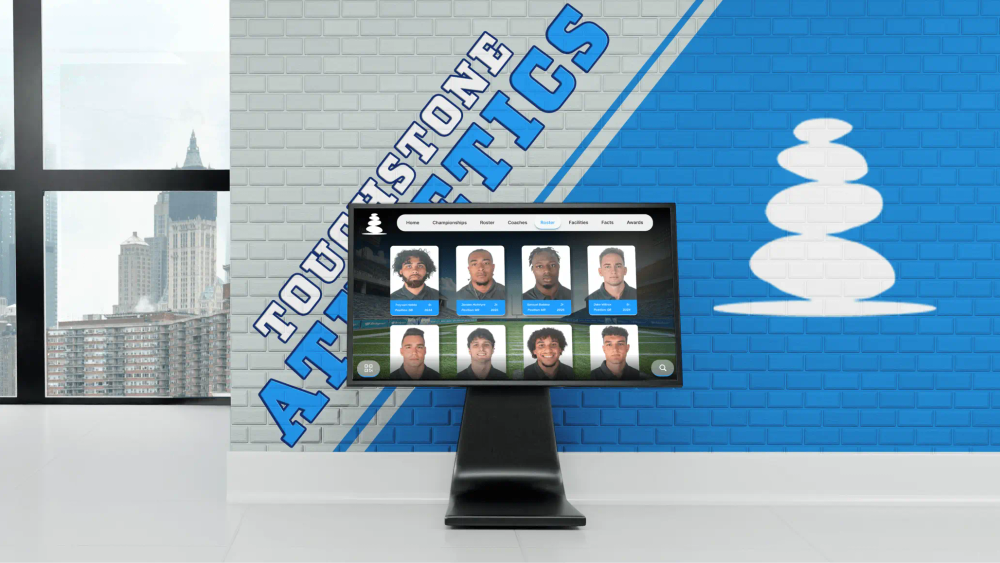
Yes. Just as you'd expect alignment, collaboration, and sincerity from a business partner, expect them from your recognition software provider. Pay attention to the company's goals, mission, and values, and ask whether they align with your organization's needs.
You want a platform that works, constantly improves, lets you add content easily, offers around-the-clock support, and goes above and beyond when needed. When deciding which company is best equipped to deliver, ask:
- What are this company's real goals?
- Do they succeed when you succeed?
- Are they planning to sell to a massive corporation down the line?
- Do they face investor pressure to grow at all costs?
- Will you just become another account number — just another brick in the wall?
Set yourself up for long-term success by choosing a trusted partner whose goals align with your needs.
The bottom line
Choosing to digitally revamp your organization shows a clear desire to modernize, optimize, and — most importantly — preserve your information for the years ahead. To guide your decision, weigh these seven attributes in order of priority: cost, ease of use, platform beauty, customer support, loading speed (vs. unlimited data), features, and the company's future.
Frequently asked questions
How long does it take to set up digital recognition software? Most installations are up and running within one to three weeks, though the timeline depends largely on how quickly your content — photos, videos, records, and yearbooks — is gathered. Providers with white-glove onboarding can move faster, and some projects are completed in under a week.
Can non-technical staff manage the platform on their own? Yes. Most modern platforms are built for non-technical users, with visual editors and simple navigation for adding or updating content. Before buying, confirm that bulk actions — like uploading a spreadsheet of profiles at once — are supported, so updates don't turn into a weekend project. Some companies even offer a "done-for-you" service.
Does digital recognition software work on mobile devices? It should. The best platforms are fully mobile-responsive, so alumni, donors, and fans can browse from a phone, not just the on-site touchscreen. Ask to open a provider's largest live site on your own phone to check both speed and appearance.
What happens to my existing photos, videos, and records when I switch providers? Many providers will handle the migration of your existing content for you, though not all include it at no charge. Confirm in writing whether data transfer is part of your package, so your history moves over without extra cost or lost time.
Can digital recognition software display more than athletics? Yes. Beyond an athletic Hall of Fame, these platforms can power donor walls, team walls, record boards, and recognition for academics, the arts, staff milestones, and much more.
About Touchstone Digital Solutions
Touchstone Digital Solutions is a family owned and operated company that creates memorable, custom Hall of Fame, Donor Wall, Team Wall, and other touchscreen experiences for schools, colleges, and universities trusted by programs across the ACC, Big Ten, Ivy League, and beyond. Every institution has a remarkable story, but trophies, static displays, and PDFs can only tell so much. We help bring history to life through interactive experiences that engage recruits, donors, alumni, and fans without breaking your budget. Ready to celebrate your legacy? Learn more at touchstone-ds.com.