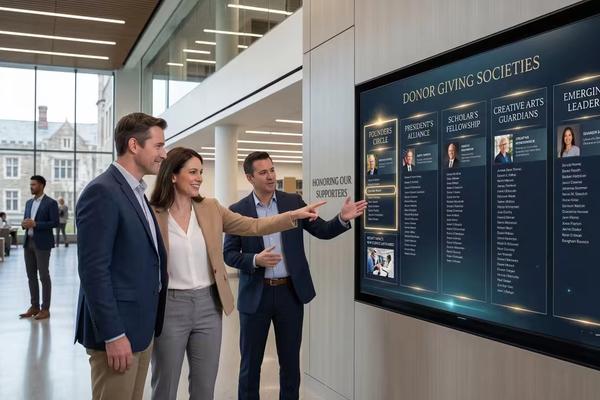

No longer are gift names carved into stone walls or etched into brass plaques. Schools are embracing digital change with the help of virtual donor recognition walls that turn static displays into moving, fun experiences, enhancing virtual donor engagement. Our appreciation for those who help our schools do well should change along with the changes that happen on campus.
Virtual donor recognition gives you flexibility, effect, and participation that you have never had before, whether you are upgrading from a traditional donor wall or starting from scratch. Let's examine how your college or university could implement this new seven-step method for thanking donors.
Step 1: Define Your Classification Goals and Method
To begin, please ensure that your classification goals and methods are clearly defined. Before you start using screens and programs, take a step back and make sure you know exactly what you want to do.
Your virtual donor recognition wall is more than just a digital billboard. It's a strategic tool that will help your university reach its bigger goals of fundraising and getting people involved. Think about yourself:
- What groups of donors, including new donors and major donors, do you want to recognize? Are they alumni, business partners, or faculty?
- Could you please demonstrate multiple ways to give to our nonprofit organization?
- How will your award wall work with upcoming projects that need money?
- Do you need something that stays put or something that you can move around for events?
The best university setups start with a clear donor recognition strategy that spells out these goals. One great thing about getting digital is that you don't have to stick to one strategy. Your wall will change as your strategy does.
Step 2: Pick the Right Digital Display Technology
The gear you choose makes up your virtual donor wall. You can choose from simple monitors to complex multi-screen setups that will be the visual center of your alumni center, library, or executive building.
Usually, the choices you see on the screen fall into two groups:
- LCD walls that you can interact with: These allow visitors to get the most involved; they can read donor stories, watch movies about the organization's work, or get additional information by typing in the names of donors. Interactive donor recognition walls turn people who are just looking at them into active participants who get more involved with your university's goal.
- Digital Showcases That Aren't Interactive: If your budget is tight or your room doesn't allow for touch interaction, standard digital screens are a cheaper alternative. They still offer dynamic content rotation and visual appeal that traditional walls just can't match.
When picking out decorations, think about:
- The larger the resolution and screen size, the better it is for reading.
- Durability, especially in areas with a lot of traffic, is essential for interactive digital displays.
- Integration that fits with the way you already design.
- For future scalability.
Step 3: Make Graphics That Look Good
The way your virtual donor wall looks will either make it much more effective or much less effective in recognizing donors. Digital donor award walls let you be as creative as you want, while traditional donor walls only let you choose from a few designs.
This is what your work should do:
- Show what your nonprofit stands for and how it is known through effective donor name displays.
- Pick letter sizes that make sense to make reading easier.
- Add things that move, like motions, transitions, or names that scroll.
- Balance is important for both story elements and balance.
- Imagery should show how successful students are and what life is like in college.
You can switch between donor lists, impact stories, campaign progress, and more on virtual walls, which lets you show a lot of different "scenes" of material.
Step 4: Include Interactive Features and Components
In this case, virtual gift recognition really stands out from other options. Current digital donor recognition systems are capable of performing the following tasks:
- Searchable donor records are great for alumni who want to find their name.
- Interactive donor walls that you can interact with show where gifts have made a difference.
- Video clips of people who have been given scholarships.
- Trackers that show real-time progress for fundraisers.
- Adding social media posts about how much donors are appreciated can significantly enhance donor engagement and recognition.
- QR codes lead to specific websites that can enhance donor engagement by providing more information about how to recognize donors.
The level of involvement should depend on how tech-savvy your audience is and how the wall is set up. In a student center that is high-tech, a wall might have more advanced designs than in an administrative building that former graduates tour.
Step 5: Connect Your Donor Tracking System to It
The operational efficiency of your interactive donor wall will mostly depend on how well it works with your present systems to improve donor relations. These days, virtual donor recognition tools can easily connect to donor databases, like Blackbaud, Salesforce, or the CRM that your development office uses.
This combination brings about two critical benefits: the power of digital donor recognition and increased visibility for your supporters.
- Automatic updates when new gifts come in mean fewer mistakes when entering data by hand.
Incorporating interactive donor wall ideas can further enhance engagement and streamline recognition.Work with your virtual donor wall provider and IT team to set up safe API links or regular ways to sync data. This approach makes sure that your recognition stays up-to-date without giving your team more work to do, improving donor relations.
Step 6: Pick the Best Place to Have the Most Impact
The location of your virtual donor wall makes it much more useful. Instead of hiding traditional gift walls in quiet areas, place digital displays where they will have the most impact.
The best places to be on college campuses are around the donor wall design.
- Main exit halls
- Hub for alumni
- Groups for students
- Buildings for institutions and government
- Places for sports
- Exclusive places for events
There is a great spot where you can see well and have a nice background for your interactive digital donor wall. It's important that your wall can be seen clearly without blocking the view, and the view should be comfy.
Think about the following:
- Lighting in the background (avoid straight sunlight on screens) is essential for showcasing your digital donor recognition wall effectively.
- Looking at viewing distances and angles
- For every guest, ease of entry to the nonprofit event is crucial.
- Data network and access to power
- Models of how traffic moves
Step 7: Set Up Your Virtual Donor Wall and Keep It Up to Date
Your virtual donation wall is a wonderful way to get donors involved and get people talking about the importance of recognizing donors. You might want to plan a special unveiling event where donors will be able to connect with the display for the first time, especially when exploring different virtual awards hall concepts that can enhance the launch experience.
But the launch of your digital donor wall isn't the end of your job; it's the beginning of enhanced donor engagement. For virtual donor walls to work well, they need to always have:
- Changes to the content keep people interested.
- Fixes and care for technology.
- Monitoring of performance.
- Training for content management staff is crucial to ensure effective donor relations and engagement.
The beneficial news? Modern digital fundraiser wall displays often have cloud-based content management systems that make updates easier, fostering ongoing donor engagement. Changes can also often be made remotely, from anywhere with internet access, enhancing the operational efficiency of your digital donor wall.
Make a management plan and give people specific jobs to do to keep the digital donor wall running smoothly and content up to date. Many companies change the topic of their awards at different times of the year or for special events and campaigns.
What Donor Information to Display (and What to Avoid)
Essential Donor Information That Actually Matters
Donor Names and Recognition Levels
This one's obvious, but let's talk about donor engagement execution. Your interactive donor wall needs to display donor names with crystal-clear hierarchy. Think of it like a social media feed—the big donors get the featured posts, while everyone else gets their moment too.
At Touchstone Digital Solutions, we've seen schools struggle with this balance. You want major gift donors prominently featured without making smaller contributors feel invisible. The sweet spot? Organized sections by giving levels: Leadership Circle, Dean's Society, Alumni Champions—whatever fits your school's vibe.
Pro tip: Make names searchable. Nothing beats the satisfaction of a donor finding their own name quickly on the recognition display, then showing it off to their spouse.
Donation Categories and Purposes
Here's where you separate the pros from the amateurs. Generic "general fund" contributions don't tell stories—specific purposes do. Your interactive digital display should showcase exactly what donors funded:
- Scholarship programs by name
- New lab equipment purchases
- Athletics facility improvements highlighted on the donor recognition wall.
- Library renovations
- Student emergency funds
When prospective donors see "The Johnson Family Engineering Lab" on the donor list instead of just "John Johnson - $50,000," it clicks. They understand impact, not just amounts.

Impact Stories and Visual Content
Static text is dead. Your interactive donor wall needs to bring donations to life through multimedia content. We're talking:
- Student testimonials: Quick 30-second videos of scholarship recipients saying thanks
- Before/after photos: That new student center didn't build itself; it was made possible by the generous support of nonprofits.
- Achievement metrics: "This gift helped 47 students graduate debt-free."
Digital donor walls Excel at this because you can update content instantly. New success story? Share it on your touchscreen donor display to inspire future contributions. Add it today, not next year when you reprint everything.
Giving History and Cumulative Contributions
Loyalty deserves recognition. Your interactive donor wall should highlight multi-year commitments and cumulative giving. Display:
- Years of consecutive giving
- Total lifetime contributions
- Progression through giving societies
- Legacy/planned giving commitments
This isn't just about ego—it's social proof. When newer alumni see established donors with 15+ years of giving on the recognition display, it normalizes the behavior.
What Information to Avoid
Over-Sharing Financial Details
Yes, transparency matters, but specific gift amounts on your donor display can backfire. Instead of "$847,392.15," try giving level ranges or society names on the traditional donor wall. People want recognition on a donor recognition wall, not their tax returns displayed.
Outdated Contact Information
Displaying graduation years from databases that haven't been updated since flip phones were popular is the epitome of "we don't have our act together." Keep it up-to-date and clean.
Generic Thank-You Messages
"Thank you for your generous support" is the participation trophy of donor recognition. Your interactive digital wall deserves better. Create targeted messaging that embodies the character and principles of your school.
Why Schools Are Changing How They Do Things

Schools and colleges across the country are finding that virtual donation recognition walls are much better than traditional ones:
- Dynamic Storytelling: From donor recognition lists that are still digital, walls make dynamic stories about effect and change.
- Cost-Effective: Initial setup costs might be about the same as those for traditional donor recognition walls, but in the long run, you'll save a lot of money because you won't have to pay for updating, engraving, or new panels.
- Sustainable: Digital solutions avoid the waste of materials that comes with updating physical displays, which is beneficial for the earth.
- Fundraising Integration: Interactive parts can lead straight to donation pages, turning recognition screens into active tools for raising money.
- Scalable Recognition: A single digital display can show off thousands of donors and switch between campaigns without taking up a lot of wall room.
Donor Recognition Has Come a Long Way
Virtual donor recognition walls are more than just a technical improvement; they show a fundamental shift in how schools connect with and appreciate their donors. By following these seven steps, your college or university can create a lively, flexible donor retention system that thanks past donors and encourages more people to give in the future.
Virtual donor walls are not separate installations for the best schools; they are part of a bigger plan to engage donors. When used properly, these digital displays can help you raise more money, build stronger relationships with donors, and show that your university is looking to the future through innovative wall design.
Are you ready to change how your organization thanks its biggest donors? For groups that care about both their donors and their online image, the digital transformation of thanking donors is now their main method, not just a trend for the future.
As the creators and installers of digital recognition walls for colleges and universities all over the world, we know the unique problems that schools face. Get in touch right away to set up a personalized meeting to talk about how a virtual donor recognition wall could help your program keep donors happy.